
Waterproof Fountain Pen Ink Guide
Water can ruin ordinary fountain pen ink pretty quickly. A small spill, wet hands, or a few drops of rain can leave writing faded or unreadable. If your notes, records, or drawings may come into contact with water, waterproof or water-resistant fountain pen ink can help keep more of the writing on the page.
Not all inks handle water in the same way. Some may wash away almost completely, while others leave enough ink behind to keep the writing readable. The result can also depend on the paper, how well the ink has dried, and the type of ink you are using.
There is another thing to consider before putting waterproof ink in your pen. Some formulas need more cleaning and care than ordinary fountain pen inks, especially if the ink is allowed to dry inside the pen.
This guide explains how waterproof fountain pen ink works, the main types you may come across, where it can be useful, and what to check before choosing one for your pen.
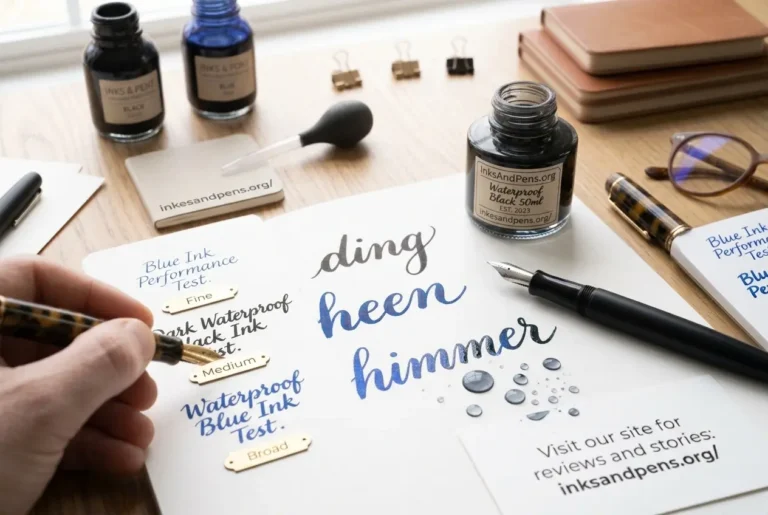
What Is Waterproof Fountain Pen Ink
Waterproof fountain pen ink is made to resist water after it has been put on paper. When water reaches the writing, the ink should stay on the page instead of washing away completely.
The word “waterproof” can be a little misleading, though. Different inks have different levels of water resistance. One ink may leave almost all of its writing behind after a water test, while another may lose some colour but still leave enough of the writing to read.
This is why water-resistant and waterproof are not always interchangeable terms. Some inks are designed to resist small spills, while others are made for situations where stronger resistance is needed. Checking the manufacturer’s water-resistance information is more useful than relying on the name alone.
The type of ink also makes a difference. Pigment-based inks contain very small colour particles that can remain on the paper after water reaches the page. Some dye-based formulas are also designed to resist water, while certain iron-gall inks become more water-resistant as they dry.
Water resistance is also affected by drying time. An ink that has only just been written may behave differently from the same ink after it has had time to dry. If the writing needs to survive water exposure, testing the actual ink on your usual paper is a simple way to see how it behaves.
There is one more trade-off to remember. Some water-resistant inks can be harder to clean from a fountain pen if they dry inside it. That does not mean they are unsuitable for fountain pens, but they should be used with the cleaning requirements in mind.
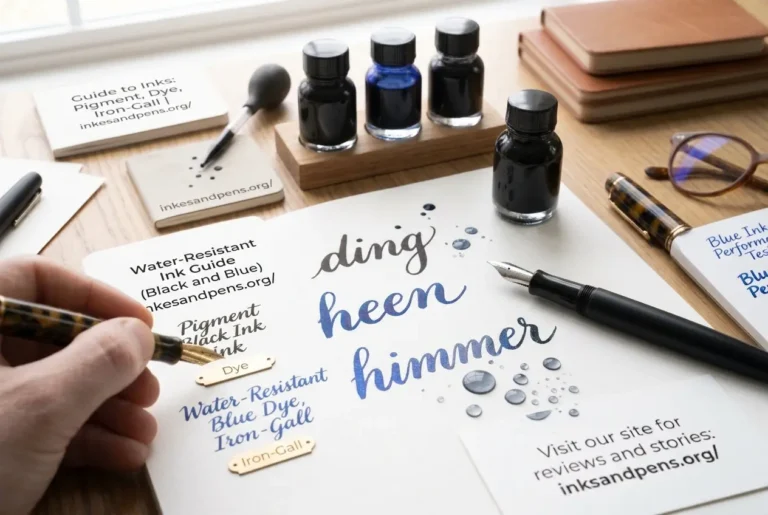
Waterproof Ink Types and Properties
There are several types of fountain pen ink that can offer some level of water resistance. They do not all work in the same way, and the exact performance can vary between individual inks.
|
Ink Type |
Water Resistance |
Main Property |
|
Pigment Ink |
Usually high |
Uses tiny particles that remain on the paper |
|
Water-Resistant Dye Ink |
Varies |
Resists water but may lose some colour |
|
Iron-Gall Ink |
Often high after drying |
Becomes more water-resistant as it dries |
|
Permanent Dye Ink |
Varies |
Designed to keep writing readable after exposure to water |
Pigment ink uses particles rather than relying only on dissolved dye. Those particles can remain on the paper when water is applied, which is why many pigment-based inks offer strong water resistance. The trade-off is that dried pigment ink can require more attention during cleaning.
Water-resistant dye inks are made to hold onto the paper better than ordinary dye inks. Their resistance can vary quite a lot, so two inks described as water-resistant may not leave the same result after a spill.
Iron-gall inks use a different chemistry. Some modern iron-gall fountain pen inks are designed to be suitable for regular fountain pen use and become more water-resistant as they dry. Their behaviour can differ from older formulations, so the specific product information matters.
Permanent dye inks are designed to leave writing readable after exposure to water, but “permanent” does not mean every ink will behave exactly the same way. If the writing is important, test the actual ink rather than assuming that the label guarantees complete resistance.
The level of water resistance can vary from one ink to another, so a writing sample or water test is useful before relying on an ink for important work.
Benefits of Using Waterproof Ink
Water-resistant ink is useful when keeping the writing on the page matters more than having the easiest possible cleaning routine.
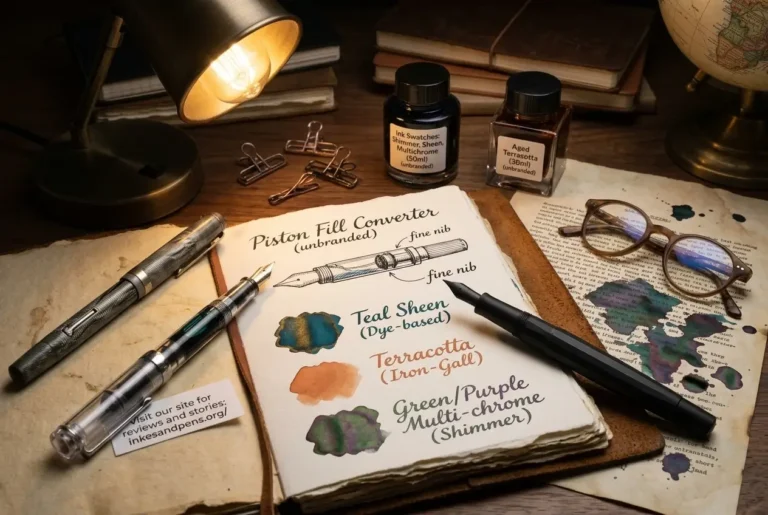
The main benefit is simple: if water reaches the page, you have a better chance of keeping the information readable.
Waterproof Ink Compared With Regular Ink
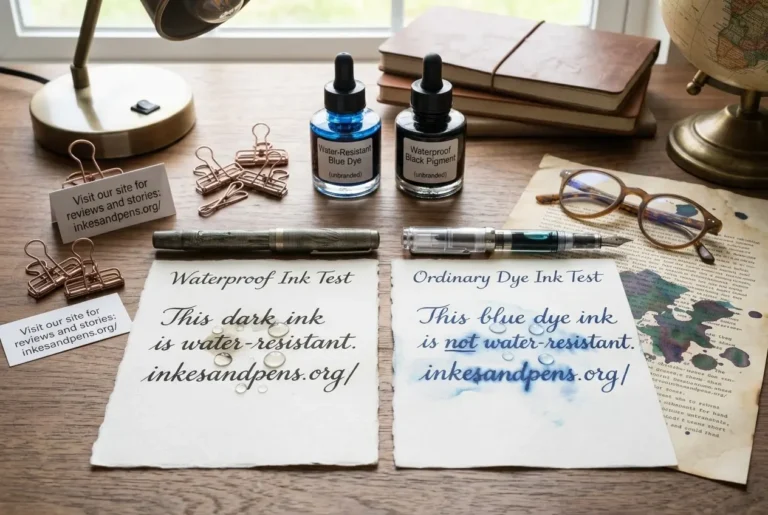
Waterproof and regular fountain pen inks are made for different priorities. Regular inks are often chosen for their colour, flow, easy cleaning, and everyday use. Water-resistant inks put more focus on keeping the writing on the paper when it gets wet.
|
Feature |
Waterproof or Water-Resistant Ink |
Regular Fountain Pen Ink |
|
Water Resistance |
Made to resist water to some degree |
Usually washes away more easily |
|
Writing After Spills |
More likely to stay readable |
May fade or wash away |
|
Cleaning |
May need more care |
Usually easier to clean |
|
Common Uses |
Notes, documents, and artwork |
Everyday writing and general use |
|
Ink Types |
Often pigment-based or specially treated dye inks |
Often dye-based |
The biggest difference is what happens after water reaches the page. A regular fountain pen ink may spread, fade, or disappear depending on the formula and paper. A water-resistant ink is designed to leave more of the original writing behind.
Cleaning is another difference worth considering. Many regular fountain pen inks are easy to flush from a pen with water. Some permanent or pigment-based inks can take more time to clean if they are allowed to dry inside the feed or nib.
This does not mean water-resistant ink is always the better choice. If you mainly write at a desk and your pages are unlikely to get wet, ordinary fountain pen ink may be simpler. If water exposure is a real concern, the extra care may be worth it.
The exact level of water resistance depends on the ink, so check the manufacturer’s information before using it for important documents.
Choosing Waterproof Ink for Different Applications
The right waterproof ink depends on what you are writing and how likely the page is to get wet. You do not necessarily need the strongest water resistance for every type of writing.

It is also worth thinking about how often you clean your pen. If you use the pen every day and clean it regularly, maintenance may be easy to manage. If a pen often sits unused for long periods, leaving permanent or pigment-based ink inside it can create more cleaning work.
FAQ
Final Thoughts
Waterproof fountain pen ink makes sense when water exposure is a real concern. A regular fountain pen ink can be perfectly fine for notes, journaling, and other writing that stays indoors and away from spills. When your writing may face rain, wet hands, spilled drinks, or water-based washes, stronger water resistance can help keep the page readable.
The choice is not only about water resistance. You also need to think about the pen, paper, cleaning routine, and type of writing. Some inks need more care than ordinary fountain pen inks, especially if they are allowed to dry inside the pen.
You also do not need the strongest waterproof ink for every situation. Start with the kind of writing you do, think about how much water exposure it may face, and then choose an ink that fits those needs.
A small writing and water test is often worth doing before using a new ink for important work. It shows you what the ink actually does on your paper instead of relying only on a label or colour sample.
What will you mainly use waterproof fountain pen ink for: everyday notes, important documents, outdoor writing, or drawing?