Fountain Pens Guide
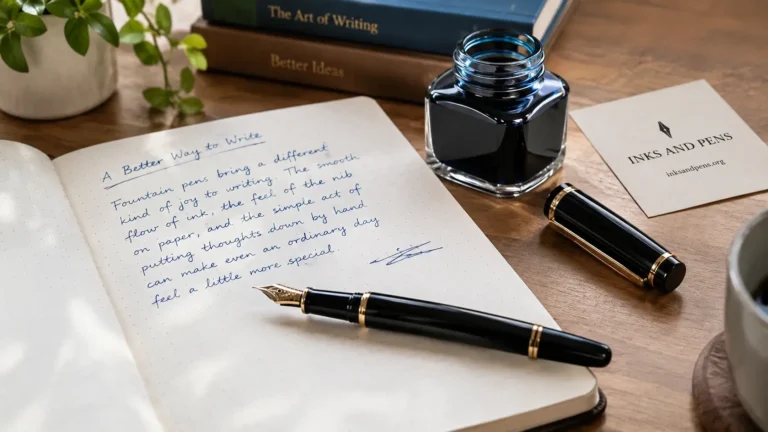
Some people think a fountain pen is outdated, something you’d only use for calligraphy or old-fashioned letters. Others assume it’s too fussy to bother with, all leaking ink and delicate parts that need babying. Then there’s a smaller group who enjoy the process of writing with one, slower and more deliberate than tapping away on a screen. Whichever camp you’re in, most of the actual questions about fountain pens come down to the same handful of things nobody explains clearly.
A fountain pen doesn’t work like a ballpoint. Ink flows through the nib on its own, pulled by gravity and capillary action, not because you’re pressing down hard. Press too hard, in fact, and you’ll bend the nib or force the ink to skip instead of flow. That single difference explains most of the early frustration people run into, from scratchy ink lines that won’t come out at all.
This guide covers the practical side of owning one: how nib sizes change your handwriting, how a pen gets filled with ink, and what separates a smooth writer from one that fights you every time you pick it up. None of it is complicated once someone lays it out properly, which is why I’m writing this in the first place.
What Are Fountain Pens and How Do They Work
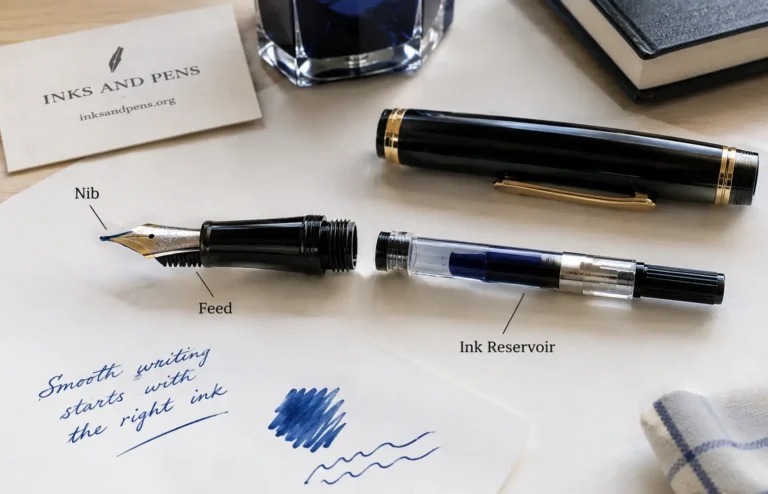
A fountain pen is a refillable writing instrument that delivers liquid ink to the page through a metal nib, instead of the paste-like ink used in a ballpoint. Inside the barrel sits an ink reservoir, either a cartridge or a converter filled from a bottle, and just below it sits the feed, a small plastic piece that regulates how much ink reaches the nib. As the nib touches the paper, capillary action draws ink down through the slit and onto the page, producing a steady line without the pressure a ballpoint pen usually needs.
That lack of pressure is the main difference in how the two pens work. A ballpoint forces ink out through friction and force. A fountain pen relies on gravity and capillary action instead, which is why pressing down hard tends to cause skipping or scratchiness rather than a better line.
Types of Fountain Pens
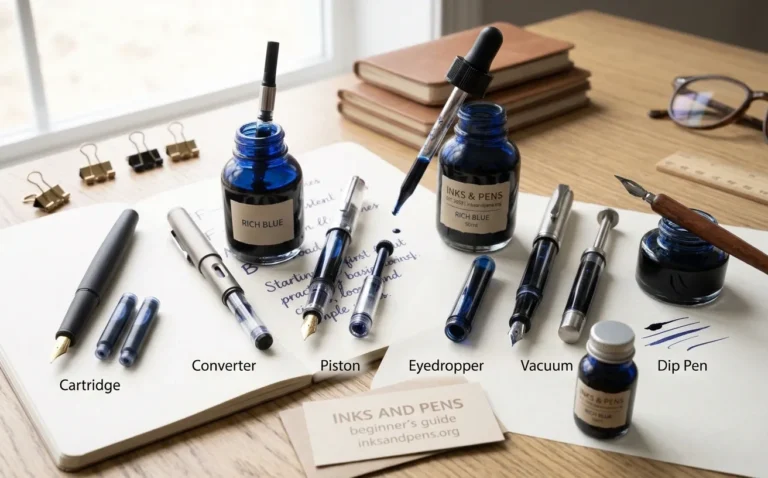
Not every fountain pen fills the same way, and that’s usually the first thing that separates one type from another.
Cartridge Fountain Pens
This is the setup most people start with, mainly because it’s the least fuss. You slide out the empty cartridge, click a new one into place, and you’re writing again in under a minute. No bottles, no mess, no guesswork. The tradeoff is choice: you’re stuck with whatever cartridge colors and brands fit your specific pen, which for most beginners is fine but eventually feels limiting once you start caring about ink.
Converter Fountain Pens
A converter looks almost like a cartridge from the outside, but it’s reusable and lets you load the pen with bottled ink instead. Dip the nib into a bottle, twist or press the converter to draw ink up into its chamber, and you’re set. What actually changes here is the sheer number of ink options you get access to: hundreds of colors and formulas instead of the handful your pen’s cartridges support. Same pen, same fit, just a lot more room to experiment.
Piston Filling Fountain Pens
Piston fillers skip the cartridge and converter entirely. Twist the knob at the end of the pen, and an internal piston moves up the barrel, pulling ink straight from the bottle into the reservoir built into the pen itself. Nothing removable, nothing to lose or misplace. The upside is capacity; these pens often hold noticeably more ink than a cartridge or converter would. The downside is that filling and cleaning takes a bit more care, since you’re working with the pen’s actual internals rather than swapping out a small part.
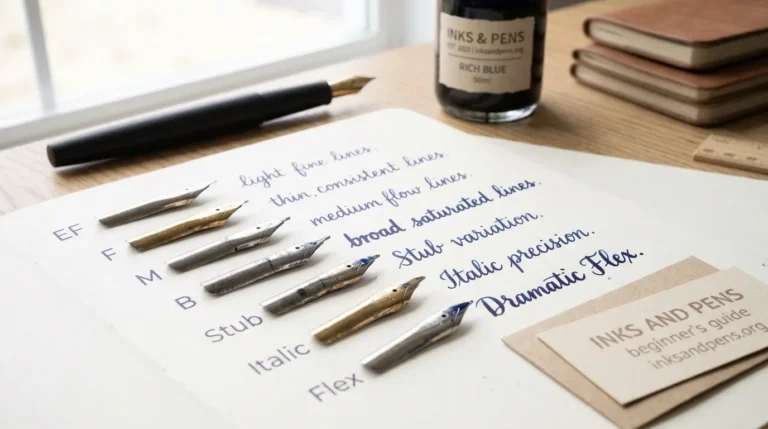
Ask five fountain pen users what “medium” nib feels like, and you’ll get five different answers. That’s because nib size isn’t standardized the way, say, shoe sizes are; it’s more of a guideline that varies by brand, and even by the exact model of pen. Still, once you know what each size is generally meant for, picking one gets a lot less confusing.
Fountain Pen Nib Types and Writing Styles
|
Nib Type |
Typical Line |
Writing Style |
|
Extra Fine (EF) |
Very thin |
Precise and controlled |
|
Fine (F) |
Thin |
Clean and consistent |
|
Medium (M) |
Moderate |
Smooth and balanced |
|
Broad (B) |
Wide |
Bold and expressive |
|
Stub |
Broad downstroke with narrower side strokes |
Distinctive and varied |
|
Italic |
Crisp, varied line width |
Sharp and formal |
|
Flex |
Variable line width with pressure |
Expressive and dynamic |
A Japanese brand’s fine nib, for instance, often runs noticeably thinner than a Western fine, so the label alone won’t tell you everything. Paper texture and the ink you’re using shift things too, sometimes enough that the same pen feels like a different size depending on what you’re writing on.
Choosing the Right Fountain Pen
Most people pick their first fountain pen based on looks, then spend the next few weeks fighting a pen that never should have been theirs to begin with. A little thought upfront saves that headache.
Writing Purpose and Usage
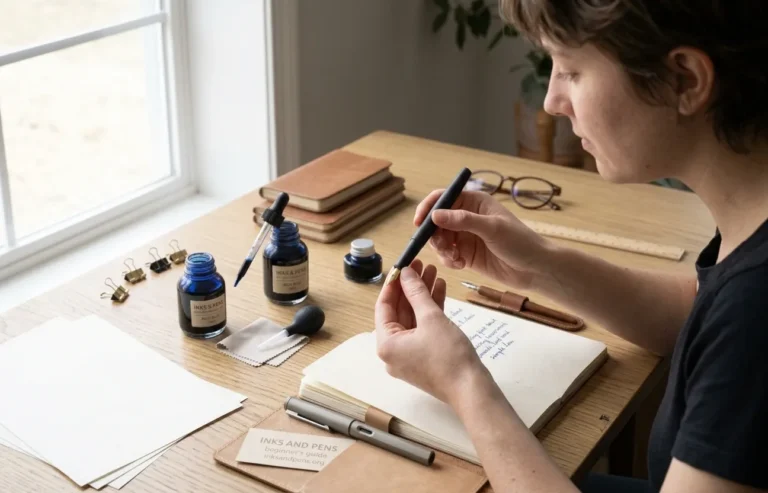
Think about the last few things you actually wrote by hand, not what you imagine you’ll write once you own a nice pen. If most of your writing is quick and functional- texts to self, grocery lists, meeting notes- you want something forgiving that starts writing instantly. If you’re journaling or writing letters, you can afford a pen that takes a beat longer to get going but feels good to hold for twenty minutes straight. Signatures and formal documents are a different case again. You’re often writing standing up or on someone else’s desk, so portability and reliability matter more there than comfort during long sessions.
Ink Compatibility Considerations
This one trips people up more than it should. Before you fall in love with a specific ink color online, check what your pen actually takes. Some models only accept their own brand’s cartridges, and there’s no converter option at all for them, though a few workarounds exist if you’re determined. If you’ve got your heart set on a particular bottled ink and your pen won’t take a converter, you’re stuck buying a different pen or living without that color. Worth checking before you buy, not after.
Nib Size Preferences
We covered the specifics of each nib width earlier, so this isn’t a repeat of that. The real question to ask yourself is simpler: do you already know your handwriting is small and tight, or large and loopy? Most people know this instinctively without ever having thought about it in relation to pens, and that instinct is usually a better guide than any size chart.
How to Maintain a Fountain Pen
A fountain pen isn’t high maintenance, but ignore it completely, and it’ll let you know. Ink can dry around the nib and feed, writing may start to skip, and a pen that once wrote beautifully can suddenly become frustrating to use. The good news is that most of these problems are easy to prevent with a few simple habits.
FAQ
Final Thoughts
Here’s the thing nobody tells you before buying your first fountain pen: it usually isn’t as complicated as it looks. Nib sizes, filling systems, inks, and paper can seem like a lot at first, but you only need to understand a few basics to get started. Think about how the pen fills, which nib feels right for your handwriting, what ink you want to use, and how to care for it.
Don’t feel like you need to find the perfect pen on your first try. A simple cartridge or cartridge converter pen is a good place to begin because you can focus on writing instead of learning a complicated filling system. Use it regularly and pay attention to what feels comfortable. You may find that a nib you expected to like feels too broad, or that a different grip or paper makes a bigger difference than you thought.
That is really how fountain pens start to make sense. You learn by using one, not by memorising every specification before your first page. Start simple, write with it, and let your preferences develop along the way.