
Fountain Pen Ink Converter Guide
A fountain pen converter lets you use bottled ink instead of cartridges. It fits inside a compatible fountain pen and lets you draw ink from a bottle when you need to refill the pen.
Converters are useful if you want to try different ink colours or brands without buying cartridges each time. You can remove the converter, refill it, and use it again.
The main thing to check is compatibility. Not every converter fits every fountain pen, so make sure the converter matches your pen before buying one.
This guide explains how fountain pen converters work, how to fill them, and what to check when choosing one for your pen.
What Is a Fountain Pen Converter
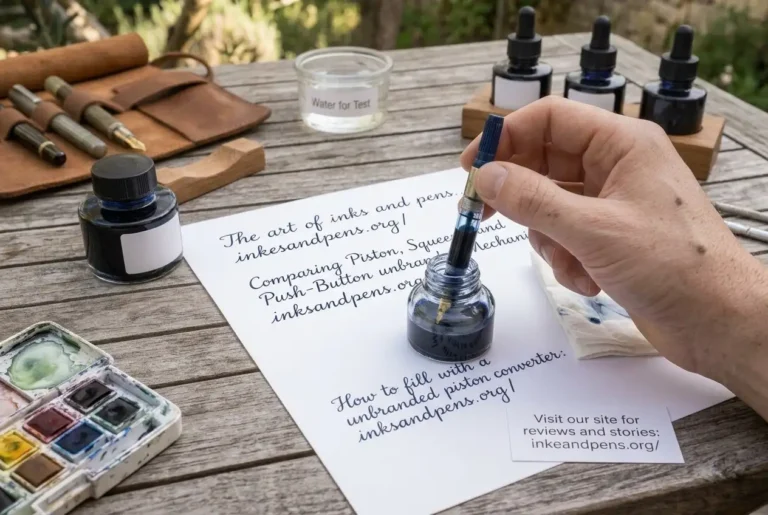
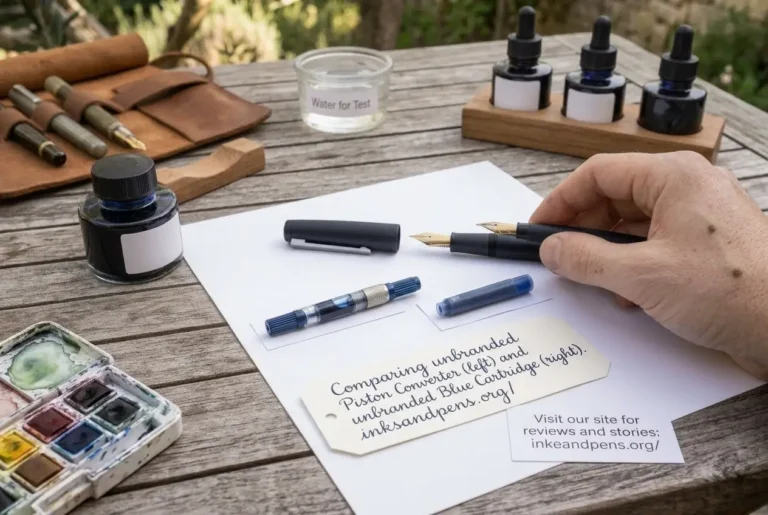
A fountain pen converter is a small refillable ink reservoir that lets you use bottled ink instead of an ink cartridge. It fits inside a compatible fountain pen and holds the ink until it flows through the feed to the nib. When the ink runs out, you can remove the converter, refill it from a bottle, and put it back in the pen.
Types of Fountain Pen Converters
|
Converter Type |
How It Works |
Main Advantage |
|
Piston Converter |
A twist knob moves a piston to draw ink into the reservoir |
Easy to fill and clean |
|
Squeeze Converter |
Squeezing the sac pushes out air, and releasing it draws ink in |
Simple filling method |
|
Push-Button Converter |
A button operates the filling mechanism to draw ink into the reservoir |
Quick to operate |
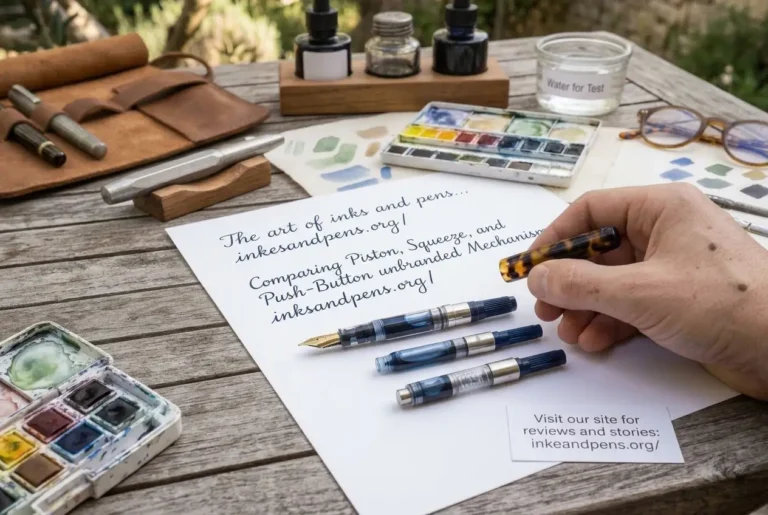
The piston converter is the type you are most likely to come across. Squeeze converters use a flexible sac, while push-button designs use a button or plunger to create suction. The exact design can vary by brand, so the converter still needs to match your fountain pen.
How to Install and Use a Converter
Converter vs Ink Cartridge
|
Feature |
Fountain Pen Converter |
Ink Cartridge |
|
How You Refill |
Fill it from a bottle of ink |
Replace the empty cartridge |
|
Ink Options |
Choose from bottled inks |
Use compatible cartridge inks |
|
Reuse |
Refill and use it again |
Usually replaced when empty |
|
Convenience |
Takes a little more time to refill |
Quick to replace |
|
Carrying Ink |
You need a bottle when refilling away from home |
Spare cartridges are easy to carry |
|
Best For |
People who like trying different bottled inks |
People who want simple refills |
A converter gives you more freedom with bottled inks, while cartridges keep refilling simple. If you enjoy trying different inks, a converter can make more sense. If you want to replace the ink quickly, cartridges are easier to manage.
Choosing the Right Converter
FAQ
Final Thoughts
A fountain pen converter is a simple way to use bottled ink instead of cartridges. Once you have a compatible converter, you can refill it and try different bottled inks without replacing a cartridge each time.
The main thing to remember is compatibility. Not every converter fits every fountain pen, so check your pen before buying one. You should also keep the converter clean, especially when changing ink colours or if the ink starts causing flow problems.
If you prefer bottled inks and do not mind the refill process, a converter can be a useful addition to your fountain pen. If you want quick and simple refills, cartridges may suit you better.
Which matters most to you when choosing a fountain pen filling method: ink choice, easy refilling, or portability?