Best Fountain Pens for Writing
The right fountain pen can make long writing much more comfortable. If you are writing for an hour or filling several pages, things like the pen’s size, balance, and nib become more noticeable than they are during a quick note.
Nib choice matters too. A Fine nib can suit smaller handwriting, while a Medium nib gives a fuller line. The ink should flow steadily so you can keep writing without constantly adjusting the pen.
When choosing a fountain pen for writing, the goal is simple: find one that suits the way you write and feels natural to use. The right choice can make a noticeable difference when you spend more time writing by hand
What Makes a Fountain Pen Good for Writing
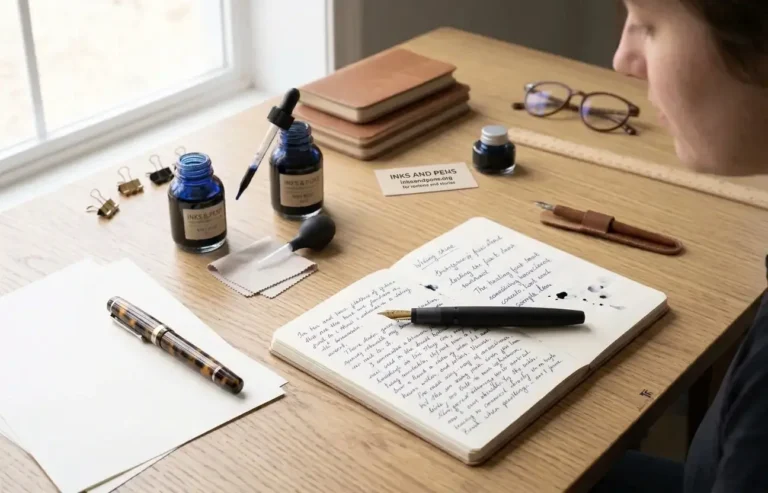
A good writing fountain pen should give you a consistent writing experience from start to finish. The line should stay predictable as you move across the page, rather than changing noticeably halfway through a writing session. This matters even more when you are writing several pages and do not want to keep stopping to check what the pen is doing
Fountain Pen Features Comparison
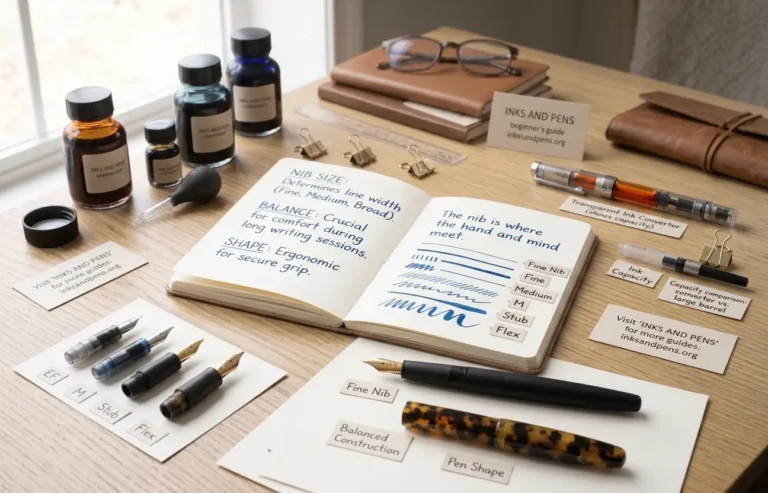
Beyond grip and filling, a few more details shape how the pen performs day to day.
|
Feature |
What to Look For |
Why It Matters |
|
Nib Size |
Fine for small handwriting, Medium for general writing, Broad for wider strokes |
Changes the width and amount of ink on the page |
|
Weight and Balance |
A weight that feels comfortable from the first page to the last |
A pen that is too heavy at the cap end can tire your hand during longer writing |
|
Ink Flow |
A steady flow that does not feel dry or overly wet |
Keeps the line consistent while you write |
|
Ink Capacity |
Enough ink for the amount you normally write |
A larger capacity means fewer refills during longer writing sessions |
Best Uses for Different Fountain Pens
Different writing tasks can call for different pen qualities. A pen that works well for quick notes may not be the one you enjoy using for several pages.
- Daily Writing: Choose a pen that is easy to pick up, refill, and use throughout the day.
- Professional Writing: Look for controlled, neat writing that works well for notes, meetings, and documents.
- Creative Writing: A wider nib or different ink can give handwritten pages more character.
Daily Writing
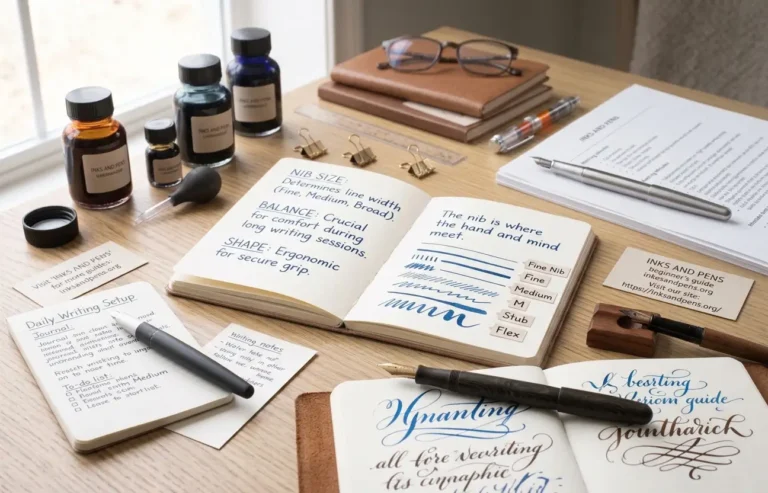
For everyday writing, you want a pen that you can pick up and use without thinking about it. A Fine or Medium nib can work well for notes, lists, journaling, and general writing. Easy refilling also becomes useful when the pen is used often. When you reach for the same pen every day, small things like these start to matter.
Professional Writing
Professional writing often means taking meeting notes, writing letters, filling out forms, or making short handwritten records. A Fine nib can keep notes compact and legible, while Medium gives the writing a slightly fuller look. A pen that stays balanced in your hand can also be easier to use when a meeting or writing session runs longer than expected.
Creative Writing
Creative writing gives you more freedom to choose a pen based on how you want your writing to look. A Medium or Broad nib can give letters a wider line, especially when used with an ink colour that stands out. Some writers also enjoy changing nibs or inks when journaling, lettering, or writing longer pieces by hand. Here, the writing experience can matter just as much as neatness.
Fountain Pen Comfort and Performance Factors
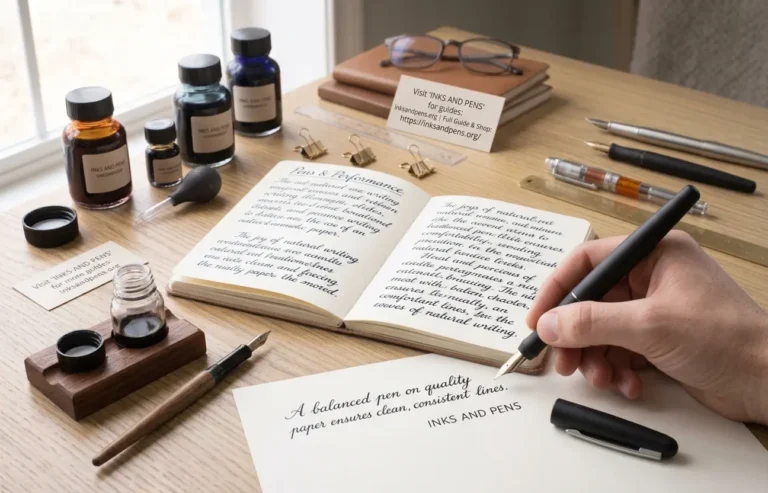
Paper can change how a fountain pen performs just as much as the pen itself. On absorbent paper, ink may spread into the fibres, causing feathering or showing through to the other side. Better suited paper keeps the writing cleaner and lets you see more of the ink’s actual line and colour.
Cap posting can also change the way a pen feels in your hand. Putting the cap on the back makes the pen longer and can shift its balance toward the rear. Some writers find that more comfortable, while others prefer writing with the cap off. Trying both can help you find what works better during longer writing.
How to Select a Writing Fountain Pen
FAQ
Final Thoughts
Choosing a fountain pen for writing gets easier once you stop looking at the pen as a list of specifications. What feels good for one writer may feel awkward for another, especially when the pen is used for several pages at a time.
A few small details can end up mattering more than a long list of features. The pen should suit the way you write and feel natural enough that you want to pick it up again. That is often easier to judge after using a pen for a while than by looking at photos or specifications alone.
You also do not have to make the perfect choice on your first try. If a pen feels awkward after regular use, that tells you something useful about what to look for next.
If you are choosing your first writing fountain pen, start with the type of writing you do most and choose from there. Once you know what feels right, narrowing down your options becomes much easier.
When choosing your next fountain pen, what matters most to you: how it feels in your hand, how it writes, or how practical it is for everyday use?