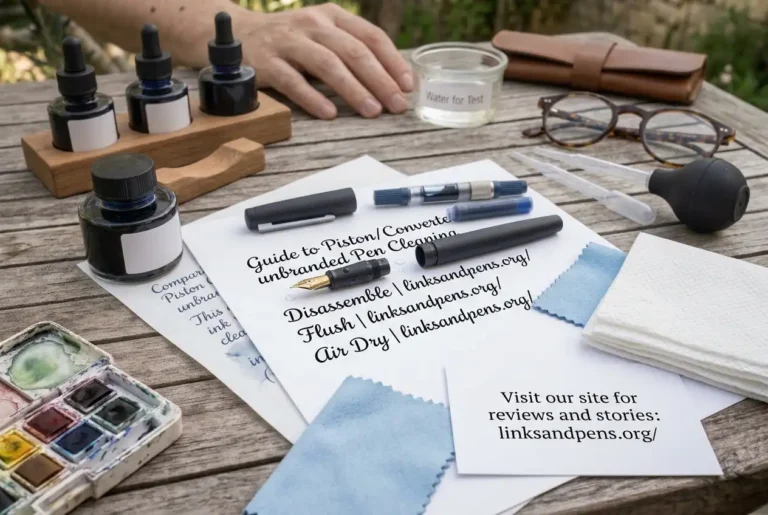
Fountain Pen Cleaning Guide

A fountain pen needs cleaning from time to time. Old ink can build up inside the pen and cause slow ink flow, skipping, or a dry nib.

For normal cleaning, you usually only need clean water. Flush the pen, rinse away the old ink, and let it dry before filling it again. If the ink has dried inside the pen, it may need a longer rinse or soak.

This Fountain Pen Cleaning Guide covers when to clean your pen, how to clean it, and what to do when a simple rinse is not enough.
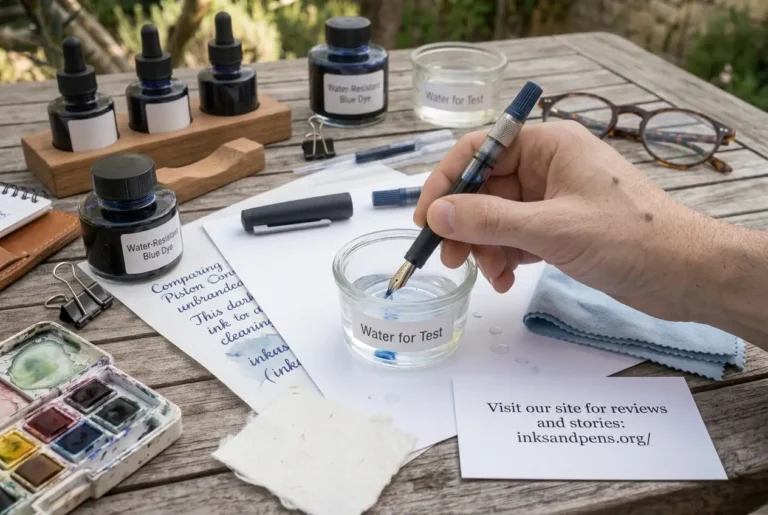
Fountain pen being cleaned with water

Why Fountain Pens Need Regular Cleaning

Ink can dry inside a fountain pen when it sits unused or stays in the feed for too long. Dried ink can slow the flow and cause skipping or a dry-feeling nib.

Cleaning also helps when you change ink colours. Flushing out the old ink reduces the chance of the previous colour mixing with the new one.

You do not need to clean a fountain pen after every use. How often it needs cleaning depends on how often you use it, the ink you use, and whether you change inks regularly.

Fountain Pen Cleaning Tools and Supplies
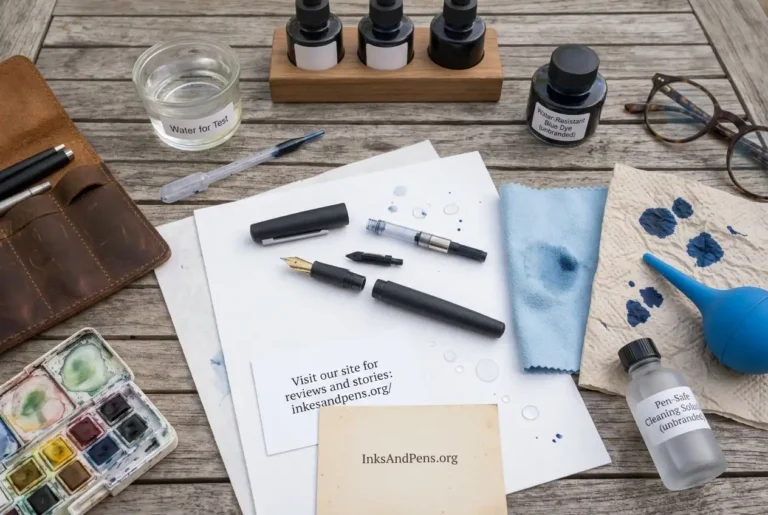
Fountain pen cleaning tools including water cup cloth and bulb syringe
  • Clean water: Use clean, cool or lukewarm water to flush old ink from the pen.
  • Small cup or container: Useful for rinsing the nib and soaking parts when needed.
  • Soft cloth or paper towel: Use it to wipe excess water and ink from the nib and pen parts.
  • Bulb syringe: Helpful for flushing water through the feed when normal rinsing is not enough.
  • Pen-safe cleaning solution: This can help with stubborn ink, but use it only if it is suitable for your pen and ink.

How to Clean a Fountain Pen Step by Step
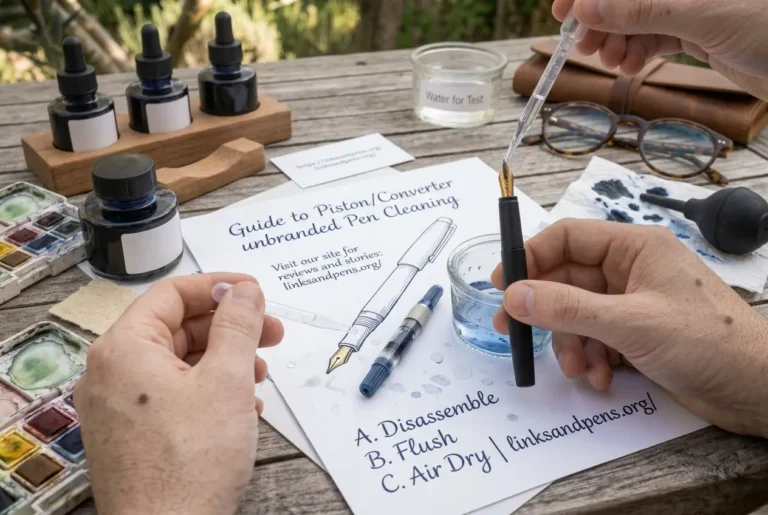
Fountain pen being flushed with clean water during cleaning
  • Empty the pen: Remove the ink cartridge, converter, or empty the pen’s filling system according to its design.
  • Flush with clean water: Rinse the pen with clean water to push old ink out through the nib. Repeat until the water runs mostly clear.
  • Soak if needed: If dried or stubborn ink remains, soak the nib section in clean water for a while. This can help loosen ink that does not come out with normal flushing.
  • Flush again: Rinse the pen again after soaking to remove the loosened ink.
  • Remove excess water: Gently shake off excess water and place the nib section on a soft cloth or paper towel to drain and dry.
  • Refill the pen: Once most of the cleaning water has drained away, refill the pen using its normal filling system and fresh ink.

Cleaning Different Fountain Pen Parts

Fountain Pen Part

How to Clean It

What to Watch For

Nib and Feed

Flush with clean water until most of the old ink is gone

Do not use force or sharp objects to remove dried ink

Grip Section

Rinse or flush according to the pen’s design

Check the manufacturer’s instructions before soaking it

Converter

Fill and expel clean water several times

Keep rinsing until the water comes out mostly clear

Ink Cartridge

Replace an empty cartridge rather than trying to clean it

Do not refill disposable cartridges unless they are made for reuse

Barrel

Clean or rinse it only if the pen’s construction allows it

Some barrels should not be exposed to water, so check the pen’s instructions

Cap

Wipe the inside and outside with a soft, damp cloth

If you rinse the cap, make sure no water remains trapped inside

Piston Filling System

Follow the pen manufacturer’s cleaning method

Do not force the piston if it feels stuck

Common Fountain Pen Cleaning Mistakes
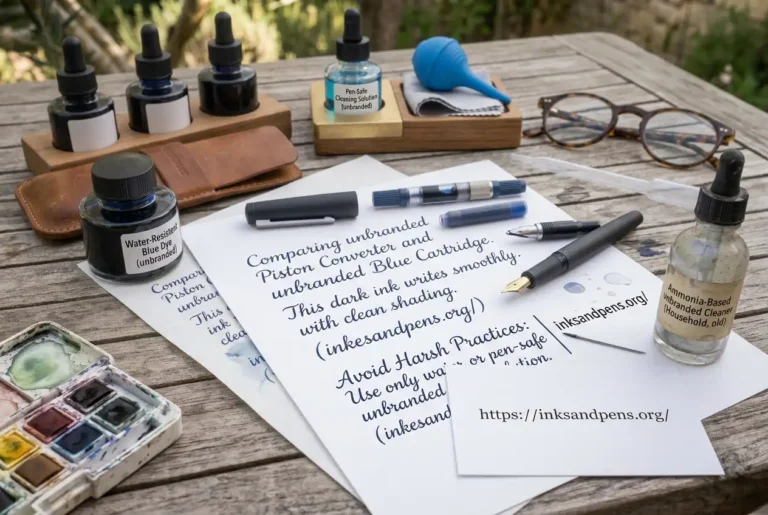
Proper and improper fountain pen cleaning methods
  • Using hot water: Very hot water can damage some pen materials or parts. Cool or lukewarm water is a safer choice for routine cleaning.
  • Using too much force: Do not force the nib, feed, converter, or filling mechanism when something feels stuck. A stuck part may need a different cleaning method.
  • Using harsh chemicals: Avoid alcohol, strong solvents, and household cleaners unless the pen manufacturer specifically says they are safe for that pen.
  • Soaking every pen for too long: Soaking can help loosen dried ink, but not every pen part should be left in water for long periods. Check the pen’s construction first.
  • Cleaning with sharp objects: Do not use pins, needles, or other sharp tools to remove dried ink from the nib or feed. They can damage delicate parts.
  • Refilling before cleaning properly: Adding fresh ink while a lot of old ink or cleaning water remains inside can affect the new ink’s colour and flow.
  • Ignoring the filling system: Cartridge-converter, piston, and other filling systems may need different cleaning methods. Do not assume one method works for every pen.

FAQ

Clean a fountain pen when you change ink, notice poor ink flow, or have not used it for a long time. The exact cleaning frequency depends on how often you use the pen and the type of ink you use.

Yes. Clean water is usually enough for routine fountain pen cleaning. Flush the pen several times to remove the old ink. Dried or stubborn ink may need soaking or another pen-safe cleaning method.

A fountain pen can become clogged when dried ink builds up in the nib or feed. This can cause skipping, slow ink flow, or a dry-feeling nib. Flushing the pen with clean water can often remove the buildup.

There is no fixed drying time for every fountain pen. After cleaning, remove excess water and let the pen drain and air-dry before refilling it. Larger or more enclosed parts may take longer to dry.

Yes, an ultrasonic cleaner can damage some fountain pens or their parts. Whether it is safe depends on the pen’s materials and construction, so check the manufacturer’s instructions before using one. Routine cleaning usually does not require an ultrasonic cleaner.

Final Thoughts

Here’s the thing nobody tells you before buying your first fountain pen: it usually isn’t as complicated as it looks. Nib sizes, filling systems, inks, and paper can seem like a lot at first, but you only need to understand a few basics to get started. Think about how the pen fills, which nib feels right for your handwriting, what ink you want to use, and how to care for it.

Don’t feel like you need to find the perfect pen on your first try. A simple cartridge or cartridge converter pen is a good place to begin because you can focus on writing instead of learning a complicated filling system. Use it regularly and pay attention to what feels comfortable. You may find that a nib you expected to like feels too broad, or that a different grip or paper makes a bigger difference than you thought.

That is really how fountain pens start to make sense. You learn by using one, not by memorising every specification before your first page. Start simple, write with it, and let your preferences develop along the way.