Best Gel Pens Guide
A good gel pen should write smoothly, give you a clear line, and feel comfortable in your hand. But the right pen can be different for each person.
If you write small notes, a fine tip may suit you better. For everyday writing, a medium tip can give you a fuller line. Drying time, ink flow, grip, and the way the pen is designed can also make a difference.
This Best Gel Pens Guide covers the features worth checking before you choose a gel pen, including tip size, ink flow, comfort, drying time, and different writing needs.
What Are Gel Pens and How Do They Work
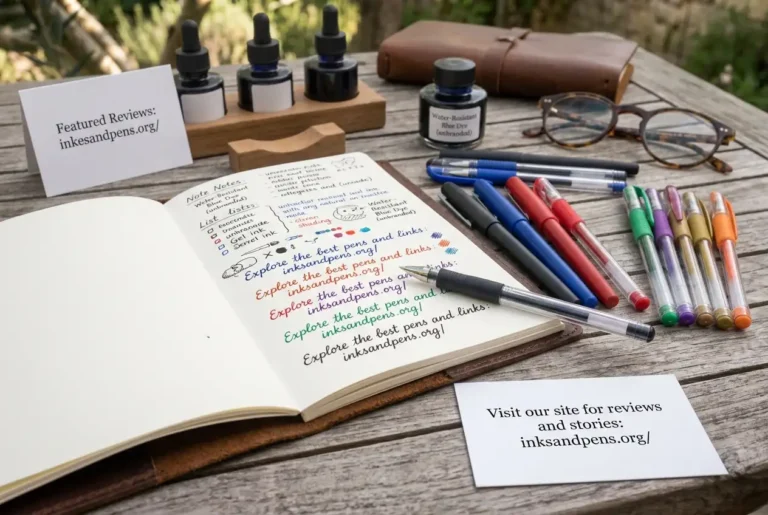
Gel pens use gel ink that flows through the pen tip as you write. A small ball at the tip rolls across the paper and puts the ink onto the page.
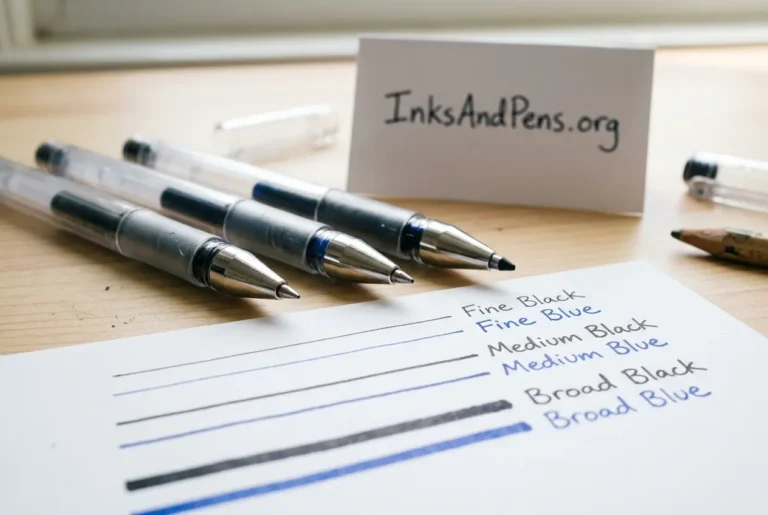
Gel ink usually gives a smooth line without needing much pressure. The tip size affects how wide that line looks. Fine tips make thinner lines, while wider tips leave a broader line and more ink on the paper.
The ink can also affect how the pen feels. Some gel pens dry quickly, while others stay wet longer and may smudge if you touch the writing too soon.
Gel Pen Features to Compare
|
Feature |
What to Look For |
Why It Matters |
|
Tip Size |
Fine, medium, or broad tip based on your handwriting |
Changes the width of the line and the amount of ink on the page |
|
Ink Flow |
Smooth flow without skipping or sudden gaps |
Keeps your writing steady from start to finish |
|
Drying Time |
Ink that dries fast enough for the way you write |
Helps reduce smudging, especially during quick note-taking |
|
Grip |
A grip that feels comfortable in your hand |
Makes the pen easier to use during longer writing sessions |
|
Ink Colour |
Colours that fit your writing or creative work |
Gives you more options for notes, journaling, and drawing |
|
Pen Design |
Retractable or capped design that suits your routine |
Affects how quickly you can start writing and how you carry the pen |
|
Refill Options |
Refills that fit the pen and are easy to find |
Lets you keep using the pen without replacing the whole body |
Different Types of Gel Pens
Gel pens come in a few different designs. Some are made for quick everyday writing, while others let you replace the refill or use special inks.
Retractable Gel Pens
Retractable gel pens have a click button that brings the tip out when you need it and pulls it back in when you are done. You do not have to deal with a separate cap, which makes them handy for everyday notes and quick writing.
Refillable Gel Pens
Refillable gel pens let you replace the empty ink refill instead of replacing the whole pen. This can be useful when you already like the pen and want to keep using it. Just make sure the refill fits the pen before buying it.
Specialty Gel Pens
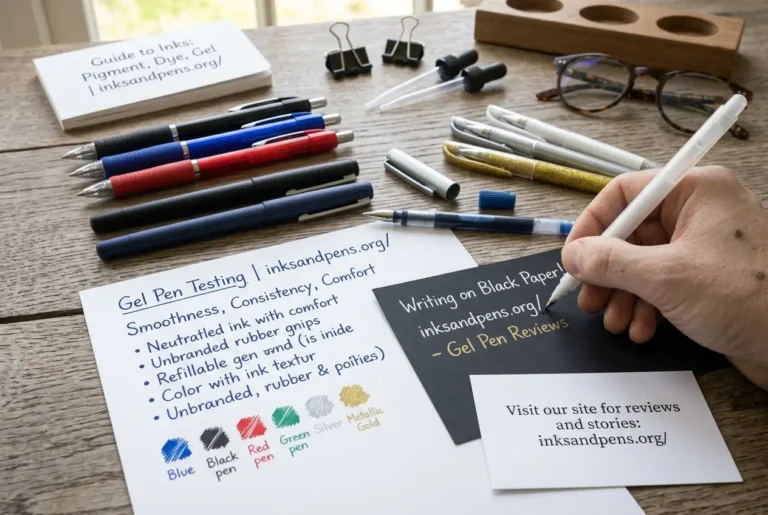
Specialty gel pens use inks made for a particular look or purpose. You can find metallic, glitter, white, and other special effect inks. They are often used for crafts, journaling, drawing, and writing on dark paper.
Choosing Gel Pens for Different Uses
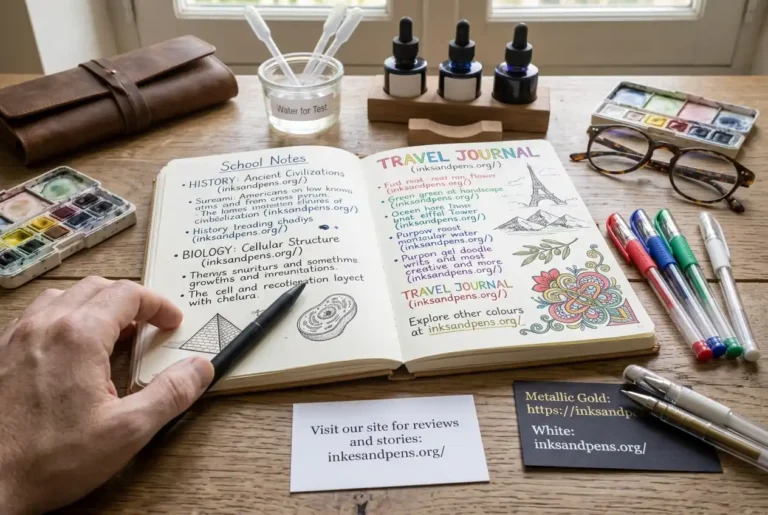
Gel Pen Ink Performance Factors
|
Ink Factor |
What to Look For |
Why It Matters |
|
Ink Flow |
A steady flow without skipping or stopping |
Keeps the line even as you write |
|
Drying Time |
Ink that dries at a suitable speed for your writing |
Helps reduce smudges and messy pages |
|
Colour Strength |
A colour that looks clear and consistent on the paper |
Makes notes and writing easier to read |
|
Line Consistency |
A line that stays similar from start to finish |
Prevents thin or patchy areas in your writing |
|
Smudge Resistance |
Ink that does not smear easily once dry |
Useful for quick notes and left handed writing |
|
Water Resistance |
Ink that can handle some contact with water |
Helps protect writing from accidental spills |
FAQ
Final Thoughts
Here’s the thing nobody tells you before buying your first fountain pen: it usually isn’t as complicated as it looks. Nib sizes, filling systems, inks, and paper can seem like a lot at first, but you only need to understand a few basics to get started. Think about how the pen fills, which nib feels right for your handwriting, what ink you want to use, and how to care for it.
Don’t feel like you need to find the perfect pen on your first try. A simple cartridge or cartridge converter pen is a good place to begin because you can focus on writing instead of learning a complicated filling system. Use it regularly and pay attention to what feels comfortable. You may find that a nib you expected to like feels too broad, or that a different grip or paper makes a bigger difference than you thought.
That is really how fountain pens start to make sense. You learn by using one, not by memorising every specification before your first page. Start simple, write with it, and let your preferences develop along the way.