
Fountain Pen Ink Colors Guide
Choosing a fountain pen ink colour is not always easy. There are so many shades that it can be hard to know what will actually look good on paper.
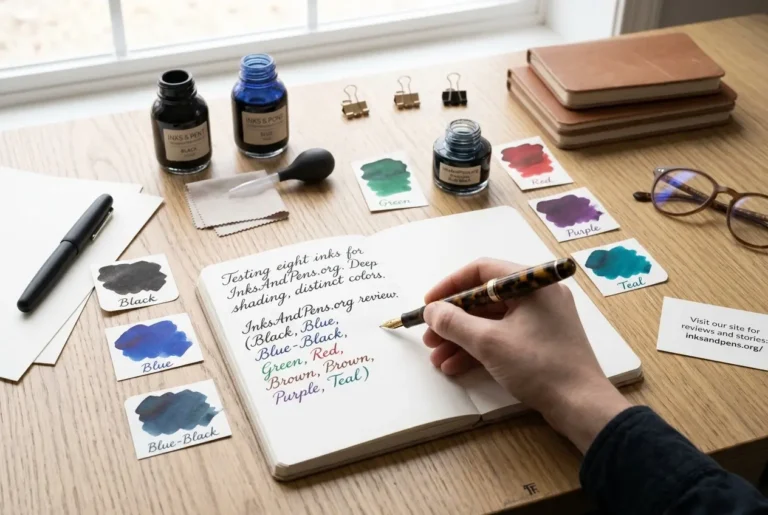
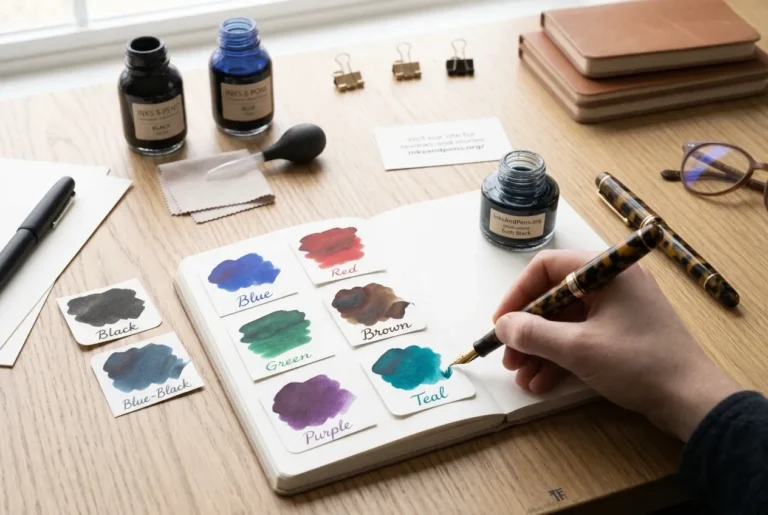
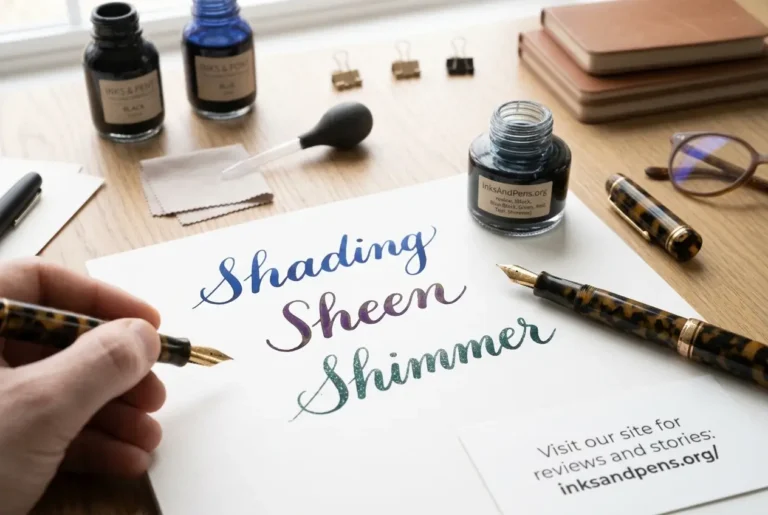
Black and blue are simple choices for everyday writing, but you can also try green, brown, red, purple, teal, and many other shades. Some inks also have effects like shading, sheen, or shimmer.
The colour can look different depending on the pen and paper you use. A quick writing sample is often the easiest way to see what an ink really looks like.
Understanding Fountain Pen Ink Colors
Fountain pen ink colours are not always as straightforward as they look on a colour chart. Two inks may both be called blue, for example, but one can look deep and dark while another may be bright, soft, or slightly greenish. The amount of ink on the page can change the result too. A wetter nib may make a colour look darker, while a finer nib can leave a lighter-looking line.
Some inks also show changes within the same colour as you write. You may notice darker areas where more ink collects and lighter areas where the line is thinner. This is called shading, and it can make ordinary handwriting look more varied without changing the ink colour itself.
When choosing an ink, it helps to judge the colour from an actual writing sample rather than the name on the bottle. The same shade can look quite different depending on the nib, paper, and amount of ink reaching the page.
Popular Fountain Pen Ink Color Categories
Popular Fountain Pen Ink Color Categories
|
Ink Color |
Common Use |
General Look |
|---|---|---|
|
Black |
Documents and formal writing |
Dark and clear |
|
Blue |
Schoolwork, notes, and everyday writing |
Classic and easy to read |
|
Blue-Black |
Professional writing and correspondence |
Dark with a blue tone |
|
Green |
Personal notes and annotations |
Soft or rich |
|
Red |
Corrections and marking |
Bright and noticeable |
|
Brown |
Letters and personal writing |
Warm and earthy |
|
Purple |
Creative writing and journaling |
Rich and colourful |
|
Teal |
Creative and personal writing |
Blue with a green tone |
Blue Ink Shades
Blue inks range from pale and bright shades to deep navy and blue-black. Lighter blues can look relaxed, while darker blues are easier to use for everyday and formal writing.
Black Ink Shades
Black ink can be deep and bold or softer with a grey tone. The darker shades give writing a strong, clear look, while softer blacks can feel less harsh on the page.
Red and Purple Ink Shades
Red inks can range from bright red to darker burgundy shades. Purple inks also vary from light lavender to deep purple. Both give handwriting more colour than the usual black or blue.
Choosing Ink Colors for Different Uses
Special Ink Effects and Finishes
| Ink Effect | What It Looks Like | Commonly Found In |
| Shading | Lighter and darker areas in the same line | Many fountain pen inks |
| Sheening | A second colour appears in heavier areas of the ink | Some highly saturated inks |
| Shimmer | Tiny particles add sparkle to the writing | Shimmer inks |
Shading Effects
Shading gives one line lighter and darker areas as you write. It is often easier to notice with wetter or broader writing, where more ink reaches the paper.
Sheening Effects
Sheen appears when a second colour shows on areas where the ink has pooled or dried more heavily. It is most noticeable in some highly saturated inks and can give the writing a different colour along parts of the stroke.
Shimmer Effects
Shimmer inks contain tiny particles that add sparkle to the writing. The particles can settle inside the pen, so these inks may need a little more care and thorough cleaning.
Matching Ink Colors With Paper and Pens
The paper and pen you use can change how an ink colour looks. On smooth paper, the ink may stay closer to its original colour, while absorbent paper can make it look lighter or less defined.
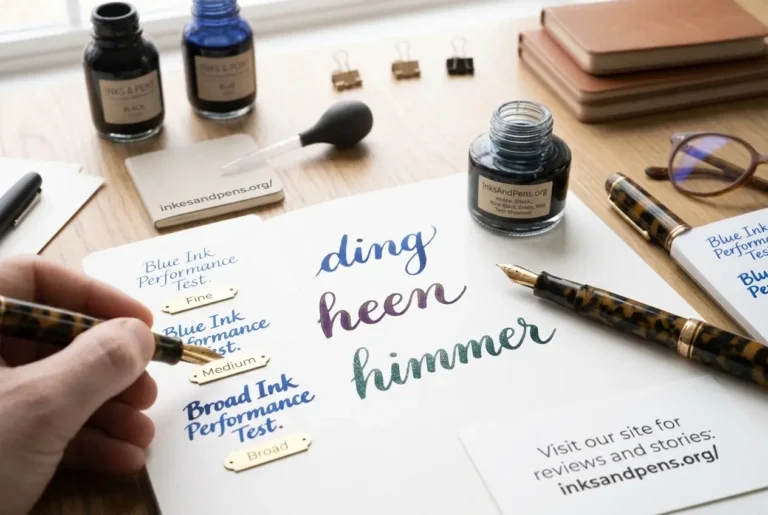
Nib size and ink flow matter too. A Fine nib puts down less ink, while a broader or wetter nib can make the same colour look darker and show more shading.
If you are trying a new ink, test it with your usual pen and paper first. A small writing sample can tell you much more than the colour shown on a screen or bottle.
FAQ
Final Thoughts
Choosing a fountain pen ink colour comes down to how you want your writing to look and where you plan to use it. Black and blue work well for everyday writing, while colours like green, brown, purple, and teal give you more options for personal or creative writing.
You can also try inks with shading, sheen, or shimmer if you want something different. Just remember that the same ink can look different with another pen or on another type of paper.
There is no need to choose a colour just because it looks good in a bottle or on a screen. Try a writing sample first, especially when you are choosing between similar shades.
Which fountain pen ink colour do you enjoy using most?