Fine Point Pens Guide
Fine point pens are useful when you want clean, controlled writing without a thick line. They can make small handwriting easier to read and give you better control when writing notes, filling forms, or adding details to drawings.
The tip size is not the only thing that matters. Ink flow, drying time, grip, and the type of paper you use can also change how a fine point pen feels. A very fine tip may give you more detail, but it may not feel right for everyone.
This Fine Point Pens Guide explains the different types of fine point pens, what to look for when choosing one, and which writing tasks they can suit.
What Are Fine Point Pens
Fine point pens have a narrow tip that makes a thin, controlled line on paper. They are useful when you need to write small or add details without the line looking too thick.
The exact tip size can vary between pen types and brands, so “fine” does not always mean the same line width. Gel pens, ballpoint pens, rollerballs, and other pens can all have fine tips, but their ink and writing feel can be different.
Fine point pens are often used for small handwriting, notes, forms, drawing, and other work where you need more control over the line.
Fine Point Pen Sizes and Tip Measurements
|
Tip Size |
Approximate Line Width |
Common Use |
|
Extra Fine |
Around 0.3 mm or less |
Very small writing and fine details |
|
Fine |
Around 0.4,0.5 mm |
Small handwriting, notes, and general writing |
|
Medium |
Around 0.6.0.8 mm |
Everyday writing with a fuller line |
|
Broad |
Around 1.0 mm or wider |
Bold writing, headings, and creative work |
Tip measurements can vary between pen types and brands. A fine gel pen and a fine fountain pen may not produce the same line width, even when both are labelled fine.
Benefits of Using Fine Point Pens
Best Uses for Fine Point Pens
Fine point pens are useful when you need small, clear lines and better control. They work well for different types of writing and detailed work.
Detailed Note Taking
Fine point pens are useful for writing small notes without making the page look crowded. They can also help when you need to fit more information into a small space, such as a planner or notebook.
Technical Writing
Fine tips work well for forms, diagrams, labels, and other work that needs neat and accurate writing. The thin line makes it easier to write inside small boxes or add details without covering nearby text.
Drawing and Sketching
A fine point pen can be useful for drawing small lines and adding details to sketches. It gives you more control when working on outlines, patterns, or small parts of a drawing.
Choosing the Right Fine Point Pen
FAQ
Final Thoughts
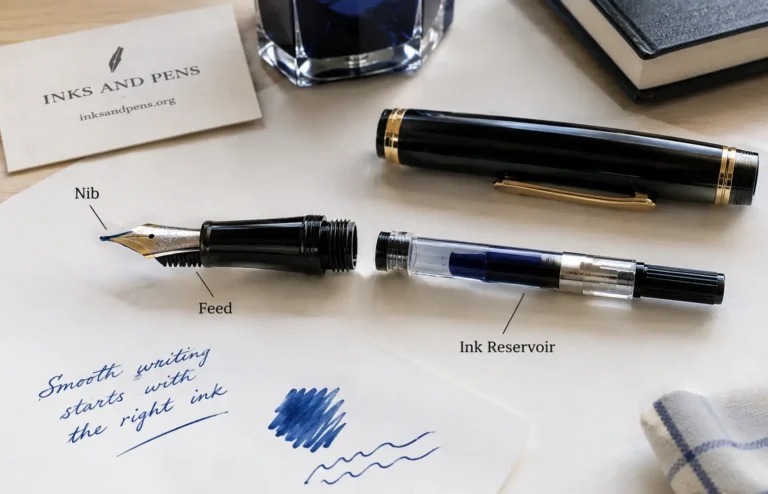
Here’s the thing nobody tells you before buying your first fountain pen: it usually isn’t as complicated as it looks. Nib sizes, filling systems, inks, and paper can seem like a lot at first, but you only need to understand a few basics to get started. Think about how the pen fills, which nib feels right for your handwriting, what ink you want to use, and how to care for it.
Don’t feel like you need to find the perfect pen on your first try. A simple cartridge or cartridge converter pen is a good place to begin because you can focus on writing instead of learning a complicated filling system. Use it regularly and pay attention to what feels comfortable. You may find that a nib you expected to like feels too broad, or that a different grip or paper makes a bigger difference than you thought.
That is really how fountain pens start to make sense. You learn by using one, not by memorising every specification before your first page. Start simple, write with it, and let your preferences develop along the way.