
Smooth Writing Pens Guide
A smooth-writing pen should move across the paper without needing much pressure. The ink should come out evenly, and the tip should not feel rough or scratchy as you write.
The right pen can depend on how you write. A fine tip may suit small handwriting, while a wider tip can give you a fuller line. Grip, ink flow, pen weight, and the paper you use can also change how the pen feels.
This Smooth Writing Pens Guide looks at the features that affect writing comfort and helps you choose a pen that fits your everyday writing style.
What Makes a Pen Smooth to Write With
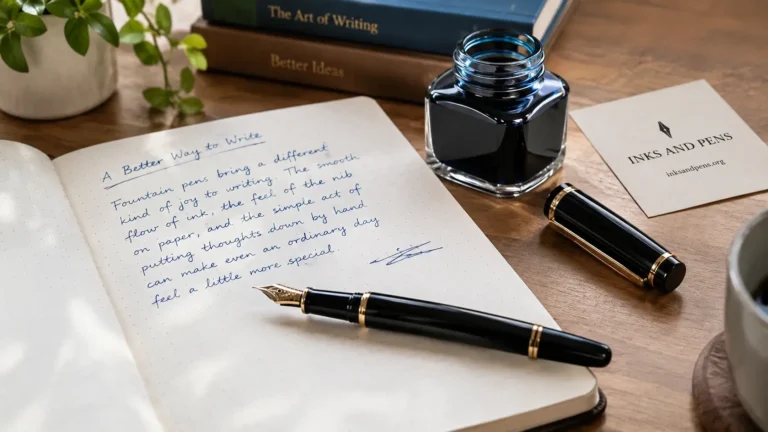
A smooth pen should move easily across the paper without needing much pressure. The ink should come out properly instead of stopping, skipping, or making dry patches.
The tip makes a big difference. If the tip feels rough on the paper, the pen can feel scratchy even when the ink itself is good. Ink flow matters too. If too much or too little ink comes out, writing can feel uneven.
Paper also changes the way a pen feels. The same pen may feel smooth on one type of paper and rougher on another.
Pen Types Known for Smooth Writing
|
Pen Type |
What It Is Known For |
Good For |
|
Gel Pen |
Smooth ink flow and clear, dark lines |
Everyday writing, notes, and journaling |
|
Rollerball Pen |
Liquid ink that gives a smooth, flowing feel |
Long writing sessions and general writing |
|
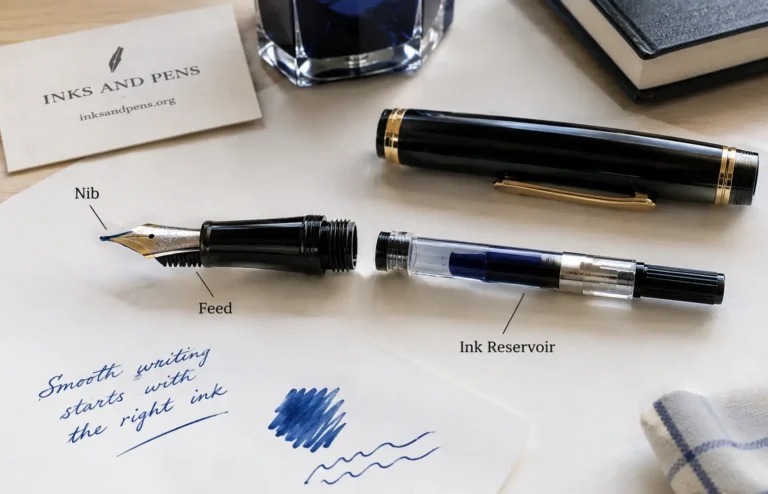
Fountain Pen |
A nib that lays down ink with little writing pressure |
Longhand writing and people who enjoy a lighter writing feel |
|
Ballpoint Pen |
Controlled ink flow and easy handling |
Everyday writing and quick notes |
|
Fine Tip Pen |
Narrow lines and good control |
Small handwriting, detailed notes, and precise writing |
Factors That Affect Writing Smoothness
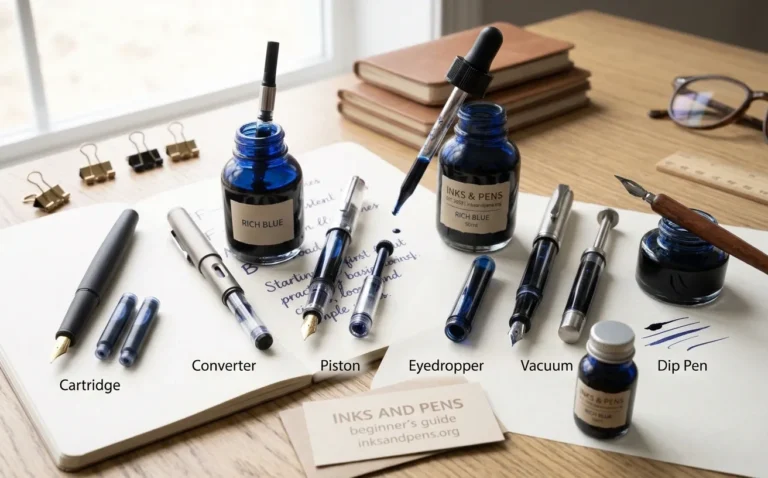
A pen can feel different depending on how its ink, tip, and pressure work together. These small differences are often what make one pen feel smoother than another.
Ink Flow Performance
Ink should come out at a steady rate while you write. If the flow keeps stopping, the pen may skip or leave parts of letters incomplete. Too much ink can also make the writing messy and take longer to dry.
Tip Size and Design
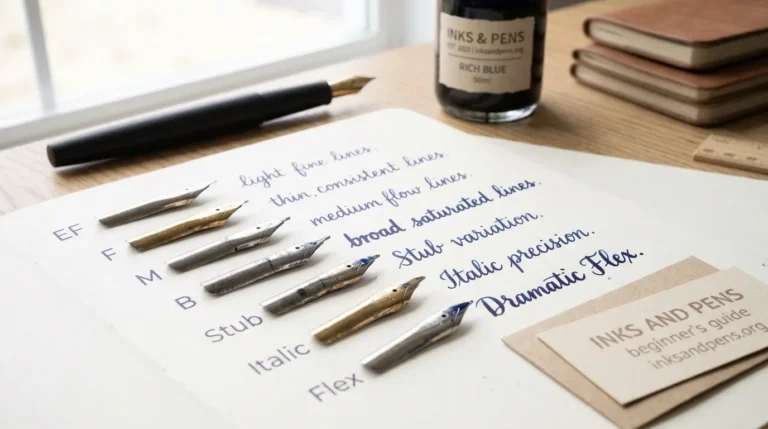
The tip affects how the pen feels on the page and how wide the line looks. A fine tip can give you more control for small writing, while a wider tip puts more ink on the paper. The shape and quality of the tip also affect how easily it moves across the surface.
Writing Pressure Requirements
A pen that writes well with light pressure usually feels more comfortable, especially when you write for a long time. If you have to press hard to get a clear line, your hand can become tired more quickly.
|
Nib Type |
Typical Line |
Writing Style |
|
Extra Fine (EF) |
Very thin |
Precise and controlled |
|
Fine (F) |
Thin |
Clean and consistent |
|
Medium (M) |
Moderate |
Smooth and balanced |
|
Broad (B) |
Wide |
Bold and expressive |
|
Stub |
Broad downstroke with narrower side strokes |
Distinctive and varied |
|
Italic |
Crisp, varied line width |
Sharp and formal |
|
Flex |
Variable line width with pressure |
Expressive and dynamic |
A Japanese brand’s fine nib, for instance, often runs noticeably thinner than a Western fine, so the label alone won’t tell you everything. Paper texture and the ink you’re using shift things too, sometimes enough that the same pen feels like a different size depending on what you’re writing on.
Choosing Smooth Pens for Different Writing Needs
Smooth Writing Pen Maintenance Tips
Keep the pen clean and make sure the tip stays free of dried ink or dirt. If the pen starts skipping or feels rough, cleaning it can help. Do not press the tip hard against the paper, as this can affect how it writes over time.
Store the pen properly when you are not using it. For pens with caps, keep the cap closed when the pen is not in use so the ink does not dry at the tip. If a pen uses a refill, replace it when the ink starts running out instead of forcing the pen to keep writing.
FAQ
Final Thoughts
A smooth-writing pen should feel easy to use without needing much pressure. Ink flow, tip size, the paper you write on, and the shape of the tip can all change how the pen feels.
Your writing style also matters. A fine tip can work well for small handwriting, while a wider tip gives a fuller line. For longer writing, a comfortable grip and good balance can make the pen easier to hold.
There is no single pen that feels smooth for everyone. The right choice depends on your handwriting, the type of writing you do, and the paper you use. Keeping the pen clean and replacing an old refill can also help it keep writing properly.
What matters most to you when choosing a smooth-writing pen: ink flow, tip size, or comfort?