Fountain Pens for Beginners
If you’re buying your first fountain pen, you may not know where to start. There are different nib sizes, filling systems, pen shapes, and plenty of ink choices. Even picking a simple everyday pen can turn into a lot of browsing.
The good thing is that you don’t need to know all of that before buying your first pen. Start with the basics. Think about how you normally write, whether you prefer a thin or thicker line, and how comfortable the pen feels in your hand. You also don’t need to press hard like you would with a ballpoint.
This Fountain Pens for Beginners guide will help you sort through those choices without making things more complicated than they need to be. We’ll look at nib sizes, filling systems, comfort, ink, and the types of writing different pens suit. From there, you can narrow things down and find a pen that feels right for you.
Why Beginners Choose Fountain Pens
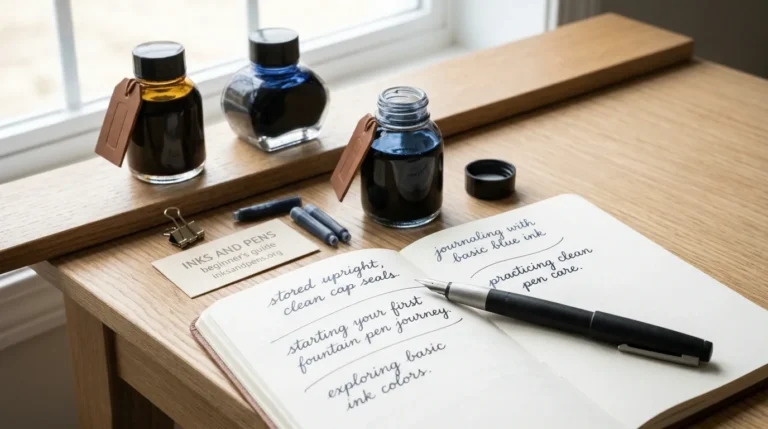
For many beginners, the appeal is simple: fountain pens make writing feel good. The nib moves across the page with very little pressure, so you are not pushing down on the paper with every word. You can also change the feel of your writing by trying a different nib size or ink colour. Some people enjoy that extra choice. Others just like having a pen that feels nicer to write with than the one they use every day.
Beginner Fountain Pen Features to Consider
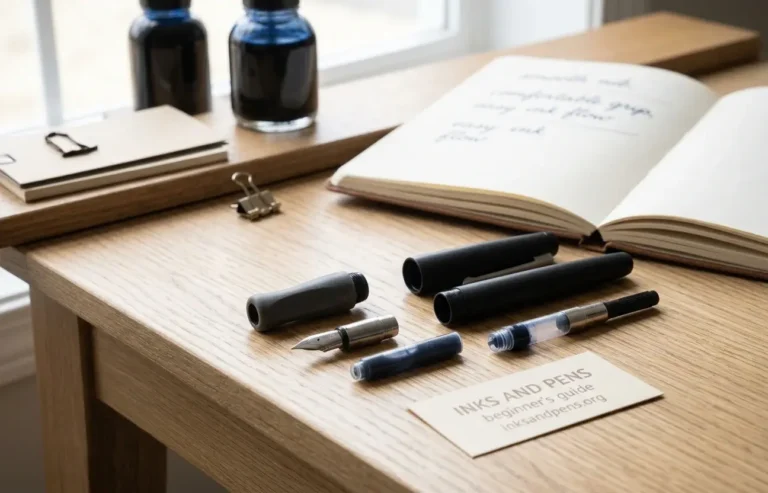
A first fountain pen doesn’t need a long list of features. A few things matter much more than the rest. Pay attention to how the pen feels in your hand, how you’ll put ink into it, and whether the nib writes properly from the start.
Comfortable Grip Design
You are going to hold the pen for every word you write, so the grip matters. Some people like a thicker grip, while others prefer something slimmer. A shaped grip can also feel great to one person and awkward to another. If you can try the pen first, do it. A pen can look perfect and still feel wrong in your hand.
Easy Filling Systems
There are two simple ways you’ll usually come across as a beginner. Cartridges are the easy option. Put one in, wait for the ink to reach the nib, and start writing. A converter lets you use bottled ink instead. It takes a little more work, but it also gives you access to a much wider range of inks.
Reliable Nib Performance
This is the part you’ll notice as soon as you put pen to paper. A good nib should start writing without much pressure and keep the ink flowing as you write. Some nibs feel smooth, while others have a little more feedback from the paper. If a new pen skips badly or feels painfully scratchy, don’t assume you’re using it wrong. The nib may simply need attention.
Fountain Pen Sizes and Nib Options
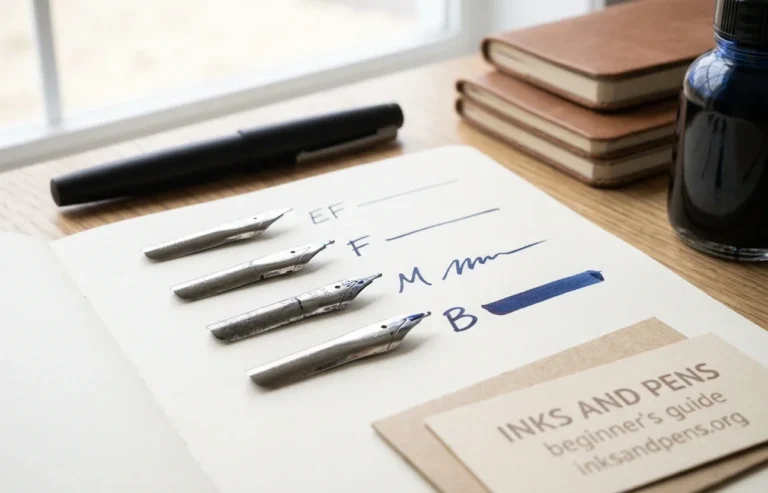
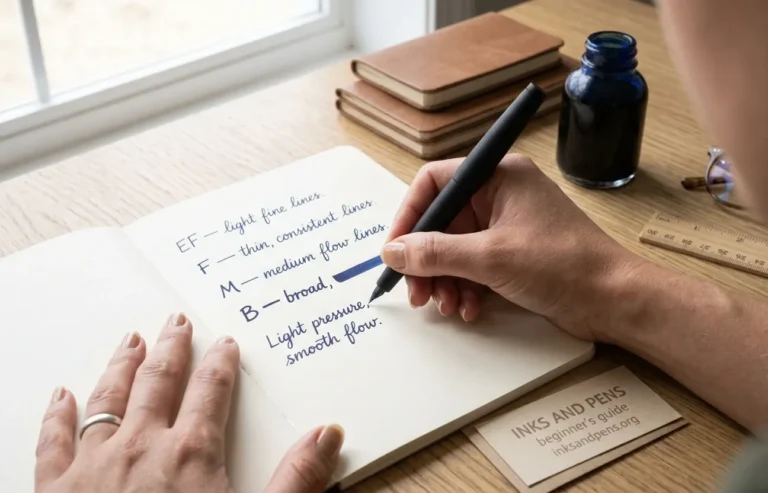
Nib size changes the way a fountain pen puts ink on the page. If you write small notes, a fine nib may feel easier to control. A medium nib gives a slightly broader line and can feel smoother for general writing. Broader nibs put down more ink and can make shading or other ink effects easier to notice.
|
Nib Size |
Line Width |
Good For |
|
Extra Fine (EF) |
Very thin |
Small handwriting and detailed notes |
|
Fine (F) |
Thin |
Everyday writing and smaller handwriting |
|
Medium (M) |
Medium |
General writing and a fuller-looking line |
|
Broad (B) |
Thick |
Signatures, headings, and expressive writing |
The size names are useful as a starting point, but they are not perfectly identical across every pen maker. If you’re unsure, Fine or Medium is a sensible place to begin and see what feels natural on your usual paper.
Common Beginner Mistakes
A few mistakes are pretty common when you’re new to fountain pens. They’re easy to avoid once you know what to look out for.
How to Start Writing With a Fountain Pen
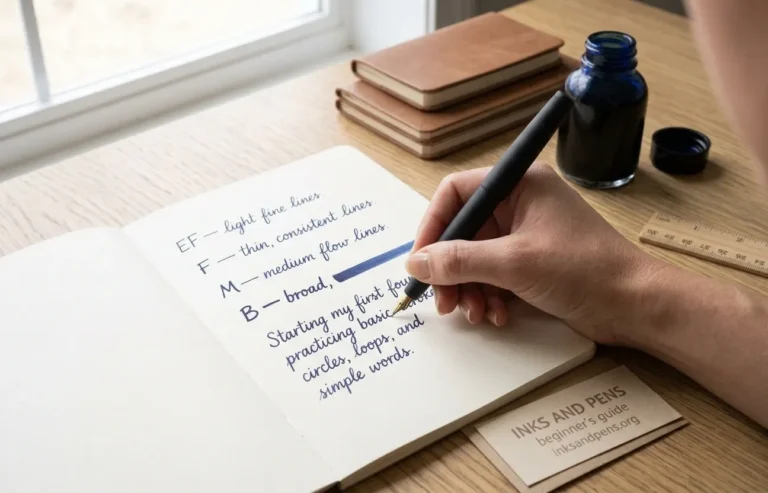
Starting is easier than it looks. You do not need a special writing technique. Just keep these few things in mind:
FAQ
Final Thoughts
You don’t need to chase the most expensive pen or worry about every nib and filling system available. Start with a comfortable grip, a nib that suits your handwriting, and a filling method that feels simple enough to use regularly.
There will be a little getting used to. You may press too hard at first, pick a nib that feels too broad, or wonder why the ink is not behaving well on your paper. That’s normal. Give yourself some time to get used to the lighter touch, and don’t be afraid to change something if it doesn’t feel right.
Once the basics feel familiar, fountain pens become much less complicated. You can start trying different nib sizes, inks, and pen styles and see what you actually enjoy.
What matters most to you in a first fountain pen: comfort, nib size, easy filling, or the way it writes?